Archive for the ‘Meet the devs’ Category

Meet Henning Eggers

Tuesday, December 2nd, 2008

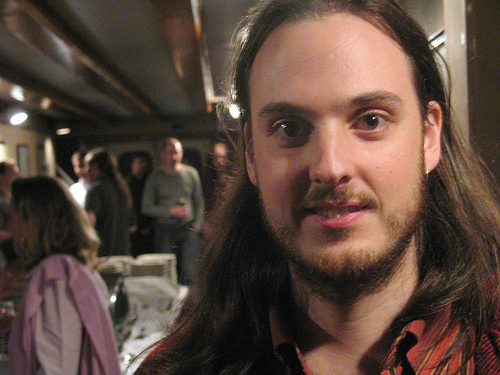
Henning EggersHenning Eggers is the most recent member of the Launchpad Translations team, working with Danilo and Jeroen. Let’s find out a bit more about him.

Matthew: What do you do on the Launchpad team?

Henning: I am a software developer on the Translations team. So far I have worked a lot on the importing and approval code. As of last week I am also the QA contact for our team.

Matthew: Can we see something in Launchpad that you’ve worked on?

Henning: Not yet, unless you are a member of the rosetta-experts team … ;-)

Matthew: Where do you work?

Henning: Pinneberg, 30 km north-west of Hamburg, Germany. Hamburg is close to the North Sea, which is about as far away from Bavaria and Munich as you can get in Germany. I do not own any Lederhosen nor do I know anybody that does.

Matthew: What can you see from your office window?

Henning: I am on the fifth (or sixth, depending on where you are from) floor and I see a tree with a magpie’s nest in it (no birds currently). Beyond that the “skyline” of central Pinneberg (population of 35000).

Matthew: What did you do before working at Canonical?

Henning: I was self-employed doing free-lance work for several customers but I had one big customer that also let me have a desk in their building. I’d been working there for 6 years (with a break) until I came here. I programmed in C, C++, Java, PHP and Python (of course), mostly network-related stuff and also some real-time data-processing lately. I was also one of the Linux experts in the company.

Matthew: How did you get into free software?

Henning: As a Linux user, really. Kernel 0.99pl13 was my starting point when I used several computers in my universities data center to copy Slackware onto a pile of floppy disks. Compiling the kernel was an over-nighter back then although I had an excessive 16 MB of RAM on my 386…

Matthew: What’s more important? Principle or pragmatism?

Well, obviously that depends on the matter involved. My principles are there to form the basis for any decision in my life but they don’t give me an answer to all of life’s possible situation. That is when pragmatism kicks in. With regard to free software, it is definitely pragmatism.

Matthew: Do you/have you contribute(d) to any free software projects?

Henning: I never got to be involved much in writing free software before joining Launchpad, I am sorry.

Matthew: Tell us something really cool about Launchpad that not enough people know about?

Henning: You don’t have to do your translations on-line. You can download them, edit them off-line and then re-upload them. Although, once our user interface is all ajaxy, nobody may want to do that any more…

Matthew: What is the deal with German people loving David Hasselhoff?

Henning: David who?

Matthew: Kiko’s special question! You’re at your computer, you reach for your wallet: what are you most likely to be doing?

Henning: Using my credit card to buy tickets, memberships, software or something like that. I also use it to mange my bank account and transfer money after a successful eBay hunt.

Meet Barry Warsaw

Friday, November 21st, 2008

Barry Warsaw mugshotOur previous Meet the developers interview was with a man known by his irc nick rockstar.

On the Launchpad team we have another rock star, the bass playing Mr Barry Warsaw!

Matthew: What do you do on the Launchpad team?

Barry: In general, it is my life’s work to see Zawinski’s Law fully realized in everything I touch. To that end, most of my Launchpad work has been to add spam vectors, er, I mean mailing lists to Launchpad. I don’t know why anybody would think I know something about mailing lists, but there you have it.

These days, the basic mailing list features are working pretty well, so I’ve been concentrating on other things, though often email related, such as the recent “Contact this user” feature.

Matthew: Can we see something in Launchpad that you’ve worked on?

Barry: If you’ve used the Launchpad mailing lists, you’ve used stuff I’ve worked on. If you try out the new “Contact this user” feature in Launchpad 2.1.11, you will be using my stuff. Well, that’s only if you like those features. If you hate them, someone else did it.

Matthew: Where do you work?

Barry: I work out of my home in Silver Spring, Maryland USA. Well, I did up until about a week ago, when I moved into a temporary rental house while we’re doing some work on our real house. I live about a mile walking distance from Washington DC.

Matthew: What can you see from your office window?

Barry: Right now, not much other than the side of my neighbor’s house, but when I’m back in my real home, I have a somewhat less boring view of the neighborhood. I can see all the way up the street leading to my house, so I’m always prepared when the Fedex truck drops off the latest awesome mugs and hoodies from the Ubuntu store (/me waits for his endorsement bonus check).

Matthew: What did you do before working at Canonical?

Barry: Directly before coming to Canonical I worked at a company called Secure Software, incidentally with Mailman’s original inventor John Viega, though we were not working on Mailman. Secure built products around static analysis of C, C++, and Java code for security vulnerabilities. It was very cool software and allowed me to do a lot of C, C++ and Java hacking as well as the usual big pile of Python. I also did more Windows development than I’d ever done before, and let’s just say it’s nice to be working for the makers of Ubuntu now! Unfortunately — or maybe fortunately — Secure did not overwhelm in the market and, here I am!

I’ve been pretty lucky to work at some great places, though my career has been pretty eclectic. I’ve been able to do a lot of open source and free software, both officially and incidentally in my career. I won’t bore you with the ten page resume though.

Matthew: How did you get into free software?

Barry: Well, I’m an old timer so I’ve actually been into free software probably before the term was even invented! My first real software job was as a summer intern at the National Bureau of Standards (now NIST), a US Federal research lab in suburban Maryland. I was hacking on homebrew graphics systems for robotic real time control and visualization, and most of the work was in FORTH. There was a pretty vibrant FORTH community and we shared lots of code, often by 8″ floppy disks, 9 track tapes and over the original ARPAnet and uucp. I continued with NBS/NIST after I graduated college and our lab eventually migrated to early SunOS systems. By that time I was learning C and hacking Unix, Emacs, window systems, etc. Back then at least, the software that US federal employees wrote was not subject to copyright (because it was taxpayer funded), so it was easy to give away, and it’s always seemed very natural for me to share code.

A few years ago I searched some of the various Usenet archives for early postings of mine. I think my first public post was of some Emacs trinket I wrote in 1985. It was probably what eventually became Supercite. In any case, tapping into that culture and its social interactions really got me hooked. I made a lot of friends online and I’ve been very luck to keep many of them and even meet some of them in the real world.

Matthew: What’s more important? Principle or pragmatism?

Barry: The Zen of Python says “Practicality beats purity”.

Matthew: Do you/have you contribute(d) to any free software projects?

Yes, quite a few actually.

These days I’m most active in Python and GNU Mailman, though there are probably a dozen or so FLOSS projects I contribute to in various ways. I used to contribute a lot to Emacs and XEmacs, but these days I prefer to just be a (l)user. I also tend to scratch my own itch, and hosting projects on Launchpad and using Bazaar makes that just incredibly easy. For example, I needed an email robot on some of my public email addresses, so I wrote ‘replybot‘ which tries to do that totally anti-social job in the most standards-compliant way possible. Even though the package is published on the Python Cheeseshop, all the project management happens on Launchpad. In fact GNU Mailman itself is hosted on Launchpad now too.

Matthew: Tell us something really cool about Launchpad that not enough people know about?

Barry: Merge proposals are my latest kick. We use them a lot on the Launchpad project, and I think they’re a great way to manage branches, review code, and link them to bugs, milestones and releases. I’m not yet sure how useful all that stuff is for smaller projects, but for a large complicated beast like Launchpad, merge proposals are really great.

Matthew: Four string, six string or fretless?

Barry: Ah, what a great question, but those are not either/ors! :) I firmly believe that if you can’t play a 4, you have no business with more strings. Guitar players would be wise to heed that advice. :) I played bass for almost 25 years before I got my first 5 string, and it’ll probably be another 25 before I get a 6. My grandkids will have to slap and pop that hi C string for me though.

Fretlesses are very cool, and I played a 4 fretless (with a hipshot) almost exclusively for many years, though I am no Jaco. A good “mwaahh” just makes me so happy. My main axe these days though is a fretted MTD American 535. Having that gut rumbling low B string is just too much fun, though you have to use it tastefully. I’m still saving up for a fretless 535 to match my main axe, but it’s much harder to sneak those things past my wife these days. :)

Matthew: Kiko’s special question! You’re at your computer, you reach for your wallet: what are you most likely to be doing?

Barry: Okay, this is a family show, right?

I do purchase a lot of stuff online. I hate going to the malls and I really hate shopping so if I can get through the holidays without getting in my car, it’s a success. One of our favorite places is Zappos because you can just order like $10,000 worth of shoes, keep the one pair you like and send them all back for free. I do buy the occasional software, but not too much ongoing services, though I’m currently looking at encrypted, secure online backups. I do tend to like to roll my own though, since hacking is so much fun.

Thanks for listening!

Meet Paul Hummer

Thursday, November 13th, 2008

Paul HummerNow it’s time to speak to Paul Hummer — the man known as rockstar — as he spills all about his life in the Launchpad team.

Matthew: What do you do on the Launchpad team?

Paul: I help integrate Bazaar into Launchpad. Basically, anything under code.launchpad.net is where I am.

Matthew: Can we see something in Launchpad that you’ve worked on?

Paul: Much of the layout for Launchpad 2.0 was work I did. I’m currently working on making the import system better and exposing much of Launchpad’s merge proposal functionality through the API.

Matthew: Where do you work?

Paul: In the basement office of my home in Fort Collins, CO, USA.

Matthew: What can you see from your office window?

Paul: There’s currently a squirrel looking down the window well, teasing Choco (my dog).

Matthew: What did you do before working at Canonical?

Paul: Early on, I helped write a social networking webapp in PHP for the Bakersfield Californian newspaper. After that, I did a lot of independent consulting for everything from managing virtual machines and mobile payment processing to RFID research and embedded Linux development.

Matthew: How did you get into free software?

Paul: In a nutshell, I would dig old computers out of the trash when the Colorado State University students would throw them away at the end of the school year. Usually, none of them had a ton of guts, so Windows wouldn’t run well on them. I discovered Red Hat 4, and it was just momentum after that.

Matthew: What’s more important? Principle or pragmatism?

Paul: I think it’s quite possible to have both. I’m very much against extremes in either direction, but I think it’s good to have a good set of pragmatic principles.

Matthew: Do you/have you contribute(d) to any free software projects?

Paul: It depends on your definition of “contribute.” Advocacy? Too many apps to count. Bug reporting? Quite a few.

As far as actually writing code, I think my first contributions were when I was 16, to apps that apparently aren’t around anymore. Recently, my contributions include loggerhead, cscvs, many Django apps, and a pretty new media center application called Entertainer.

Matthew: Tell us something really cool about Launchpad that not enough people know about?

Paul: Ooh! Ooh! I have two things. First, merge proposals are AWESOME. We’ve been using them in Entertainer since very early on. They’ve come a long way, and I think they have an obvious role to play in increasing the quality of free software. I pity free software projects that don’t have a formal code review process.

The second is code imports. I feel like LP users have this wonderful opportunity to work on patches for other open source projects without having to do the “prove yourself” dance to get commit access. Hacka hacka on a bzr branch until your patch is ready, and then submit it to the core devs. This way, you get all your work versioned, instead of having a checkout of the svn or CVS from core, and just having one version of your patch (the one created with svn diff).

Matthew: Have you experimented with alternative keyboard layouts?

Paul: Yes. I’m a Dvorak user, although my netbook is still on Qwerty. One thing I’ve noticed is that more often than not, you get typo’d words that make other words. For instance, ‘r’ and ‘l’ are right next to each other, and so when I try to type ‘whole’ I often type something offensive by accident.

Matthew: Kiko’s special question! You’re at your computer, you reach for your wallet: what are you most likely to be doing?

Paul: Let me just say that the most evilly genius thing Amazon.com does is SAVE my credit card number, so it’s too easy to spend money there. I buy A LOT of technical books, and recently, a lot of fiction books.

Meet Ursula Junque

Wednesday, November 12th, 2008

Ursula JunqueNow it’s time to speak to Ursula Junque in the latest of our Launchpad developer interviews.

Matthew: What do you do on the Launchpad team?

Ursula: Well, my job title is QA Engineer. Each day I watch the OOPSes you sometimes see when using Launchpad, and try to find out what the problem is, then I open bugs, try to get people to fix them and the like. Besides that, I work on assuring that Launchpad versions will be well tested before released. Also, I love doing python scripts to enable my work. I love my job. :)

Matthew: Can we see something in Launchpad that you’ve worked on?

Ursula: Since I work with solving bugs in Launchpad, if everything went fine you won’t notice the object of my work. ;)

Matthew: Where do you work?

Ursula: I work from home, that is at the moment in Recife, Brazil.

Matthew: What can you see from your office window?

Ursula: I can see lots of other buildings, some windows already with Christmas decorations, and a school.

Matthew: What did you do before working at Canonical?

Ursula: Right before joining Canonical, I was in a Brazilian telecom company called AsGa, developing the embedded system of a network switch. Before that, I worked at IBM’s Linux Technology Center, in a project that was an overlay of Ubuntu.

Matthew: How did you get into free software?

Ursula: It was when I started my Computer Science graduation at UNICAMP. They had Windows and Linux in there, and also a free software enthusiasts group called GPSL (Pro-Free Software Group, in Portuguese). So, I had the opportunity to use Linux and learn about free software. Well, actually I tried to use Mandrake Linux before that (a really long time ago), but my PC was too slow at the time for KDE, and my family (the PC wasn’t only mine) needed a UI-clicky thing. :)

Matthew: What’s more important? Principle or pragmatism?

Ursula: Hmm, great question. I guess this is the point where Open Source and Free Software people disagree.

I’m more a pragmatic person than one that sticks to principles. I think we have to start somewhere, and having to follow a lot of “rules” sometimes stops you from starting something that would be really great – not perfect, but a start – and that could be “adjusted” with the time. I guess it’s important to have principles to help you to trace the path where you want to go, but being inflexible, in my point of view, is not such a good thing.

Matthew: Do you/have you contribute(d) to any free software projects?

Ursula: Yes, but not with code. All code I produced were scripts to help me (and people around me) to make life easier. I should have created one project or two from them, but thought, at the time, that it was not worthy to do so. Shame on me, lost pieces of handy code! :)

I did translations in Turbogears project documentation to Brazilian Portuguese, and also for a related project called Kid, but I think the major contribution is to stay online on Freenode’s #ubuntu-br and #launchpad trying to help people to get along with stuff. :)

Matthew: Tell us something really cool about Launchpad that not enough people know about.

Ursula: Well, I think the whole of Launchpad is great, but to talk about something related to my job, I’d like to talk about dupefinder. It’s that small piece of Launchpad that is there when we’re about to file a bug. After you fill in the bug summary, it smartly tries to find the most similar bugs, giving us a list of them so we can be sure that we’re not filing a duplicate. It’s simple but extremely useful. :)

Matthew: How do you take your coffee?

Ursula: In the first mug I can find among the clean dishes in my kitchen. :)

Matthew: Kiko’s special question! You’re at your computer, you reach for your wallet: what are you most likely to be doing?

Ursula: It’s been a while since I started buying things online, so I’m almost sure I’d be taking out my credit card. :)

I always buy things from online stores such as eBay, Mercado Livre (an Argentinian, but huge in Brazil, version of eBay), and local online department stores, where I buy books, CDs, DVDs, eletronics and stuff. Also I have an account on Dreamhost, where I host my blog, that is the only actual online service I pay for.

Meet Данило Шеган

Sunday, November 9th, 2008

Danilo Segan is ShredderIt’s the turn of Данило Шеган (Danilo Segan) in the second of our Launchpad developer interviews.

Matthew: What do you do on the Launchpad team?

Danilo: I am one of the Launchpad Translations (formerly known as Rosetta) developers. Launchpad Translations is a tool to help manage translations in free software projects. It’s usually considered Ubuntu-only, but that’s far from truth: Launchpad Translations is used by few tens of upstream projects as well.

Matthew: What can we see in Launchpad that you’ve worked on?

Danilo: I’ve worked on many bits of Launchpad Translations: notable things are large improvements on the suggest-review workflow, tracking of translations changed from upstream, native KDE 3 PO format support, and searching through translations in PO files. Basically, whenever you are on any page on translations.launchpad.net, you are bound to be on a page which I have almost surely worked on.

I also spent a lot of time working with rest of the team behind the scenes help make Launchpad Translations perform well enough to not be a bottleneck of translation efforts (anybody here remembers infamous timeouts on +translate pages?).

Matthew: Where do you work?

Danilo: I either work from home or from an office shared with a few of my friends in Belgrade, Serbia: a combination of designers and web developers who it’s always fun to chat with. In the future, I want to make better use of advantages working from home have, and that means exploring different parts of the world for longer periods of time.

Matthew: What can you see from your office window?

Danilo: Some sky, and a few buildings, along with the small park. When at home, I can see bigger part of New Belgrade and Zemun (parts of Belgrade) from my window on 11th floor. This makes for a wonderful view during night, so it’s always a good way to impress girls. :)

Matthew: What did you do before working at Canonical?

Danilo: I did a lot of free software development, especially in GNOME, where I provided lot of i18n and l10n infrastructure (like l10n.gnome.org, developing xml2po, and maintaining intltool).

Just before joining Canonical, I also did a short stint working for a mobile software development company and worked on kick-starting their VoIP software development for Linux mobile phones equipped with WiFi chips as well.

Matthew: How did you get into free software?

That’s a tricky question if I am to be completely honest. So I won’t be completely honest. :) In short, I never got to like Windows, and kept developing DOS applications during Windows 3.1 and Windows 95 days. Terms like “extended” and “expanded” memory became too familiar concepts, and then suddenly I just stumbled upon a copy of Slackware 3 (or something) on floppy disks. After a few years of using it, I just wanted to contribute more, and in 2001 I started actively participating in free software communities.

Matthew: What’s more important? Principle or pragmatism?

Danilo: Most important are pragmatic principles. In essence, I feel principles are more important, but pragmatism is the shortest way to them (even if that sounds contradictory).

Matthew: Other than what you’ve already mentioned, do you contribute to any free software projects?

Danilo: Apart from the localization tools (gettext, intltool, xml2po, Serbian translations), I’ve also spent some time recently on OpenStreetMap which I readily recommend to anyone (OpenStreetMap is not a free software project per se, but it is in the same spirit :) — and I even submitted a patch for JOSM to fix some login issues.

Matthew: Tell us something really cool about Launchpad that not enough people know about?

Danilo: Launchpad Translations is available as a translation collaboration tool, for every project, even upstream ones which have separate translation procedures. To properly set this up, we restrict access only to actual upstream translation teams who are aware that manual submission of translations is still necessary.

But, if you are willing to do some of the administrative work yourself (at least until we make that automatic), you can easily make use of the Launchpad Translations collaborative translation features today!

Matthew: What was the last song you listened to?

Danilo: Whatever thing a friend at the table next to mine is actually playing. It’s not too loud not to mess anyone’s concentration (so hard to figure out which song was it), but still provides some enjoyable ambient noise.

Matthew: Kiko’s special question! You’re at your computer, you reach for your wallet: what are you most likely to be doing?

Danilo: Most likely, I am checking it’s still there (the wallet!).

I know my debit card number by heart since I’m regularly using it to buy different services and products online (I even pay for my Internet access with my debit card)—and I would be using it more if more web sites would ship to Serbia.

Meet Graham Binns

Friday, November 7th, 2008

In the first of a series that I briefly considered calling Meet the meat, here’s an interview with Launchpad developer Graham Binns.

Over the next few weeks, I’ll probe each of the Launchpad team. If you’ve got any questions – whether for everyone or a specific individual – drop me a mail.

Matthew: What do you do on the Launchpad team?

Graham: I’m a developer and one of the five developers on the Launchpad Bugs team. We work almost exclusively on the Launchpad Bug Tracker.

Matthew: What can we go and look at that you’ve done on Launchpad?

Graham: The bugs pages :) !

Actually, a great deal of my work is work you don’t get to see. Although I do some UI work (I’m working on something pretty cool at the moment that should hopefully appear in either Launchpad 2.1.11 or 2.1.12) the majority of what I do is back-end. In particular, I’ve been responsible for developing the way Launchpad interacts with other bug trackers like Bugzilla and Trac.

I’m also the principal developer of the Distribution Upstream Bug Report, which allows you to track which bugs have been forwarded upstream (and which need to be forwarded) for packages in a distribution. You can see the Ubuntu version as an example.

Matthew: Where do you work?

Graham: From my home in Lancaster, UK, most of the time.

Matthew: What can you see from your office window?

Graham: Right now I can see a very damp and angry cock-pheasant and a field full of cows.

Matthew: What did you do before working at Canonical?

Graham: I spent a couple of years working for a (now defunct – nothing to do with me, squire) mobile content company, where I did web development work in PHP. Before that I worked for a local government authority doing .NET development.

Matthew: How did you get into free software?

Graham: It took a while for me to get into free software proper but I was first introduced to it, or to Linux at any rate, by a college lecturer who installed SUSE 4.something on one of the lab machines. It ran a very clunky version of KDE and I hated using most of the time but I was taken by the idea of people doing all this work for no other reason than that they wanted to.

Matthew: What’s more important? Principle or pragmatism?

Graham: That depends on the situation and the principle. I’d like to think that I’m pragmatic where I need to be.

Matthew: Do you/have you contribute(d) to any free software projects?

Yes, though not nearly as much as I’d like. Actually I tend to develop my own little apps and shove them out into the world more often than I contribute to other projects, usually because of lack of time.

I’ve done a few small things in the not-too-distant past, though most of them are gathering dust at the moment:

Besides that I do my best to contribute by filing and triaging bugs where I can for the software I use, since I don’t have much programming time to lend to projects.

Matthew: Tell us something really cool about Launchpad that not enough people know about?

Graham: Not enough people, I think, are aware of Launchpad’s capability for syncing with other bug trackers. It’s something that we’re working on making better, and there are a lot of bug trackers there to sync with, but eventually we’re going to get to the point where a project’s users will be able to use Launchpad to file bugs against that project and Launchpad will automatically push those bugs to the project’s own bug tracker (say a Bugzilla or Trac instance).

That means that projects will no longer have to worry about people filing bugs in Launchpad that don’t then get forwarded upstream. In the same way, bugs on the remote tracker will be displayed through Launchpad, so users will be able to see bugs on a project without having to switch bug trackers all the time

We’ve got a couple of cool plugins that work with Bugzilla and Trac to make it possible for this bi-directional syncing to take place (we’re interested in expanding this to other bugtrackers, too).

If people are interested in installing these plugins they can file a question at http://answers.launchpad.net/malone and let us know so that we can point them in the right direction.

Matthew: What colour socks are you wearing?

Graham: Blue.

Matthew: Time for Kiko’s special question! You’re at your computer, you reach for your wallet: what are you most likely to be doing?

Graham: Interesting question. I’m most likely to be reaching for some form of government issue ID (though why I’d need it I couldn’t tell you) since I’ve memorised my credit card and bank account numbers (which should tell you something about how often I use them).